Raising Children for a World of AI: What It Really Means at Age Two
By Marni Mandell, CEO, Shalom Orlando
6 minute read
I spent most of my career in technology. Fifteen years building startups in Tel Aviv. I co-founded a marketing data analytics platform. I’ve spent a long time thinking about what AI is going to mean for the way we work, the way we learn, and the lives our children will eventually lead.
Now I run the preschool I attended as a child.
My twins are in Jewish education down the road. My grandmother was the second female president of the Jewish Federation of Greater Orlando in 1981. This community raised me. My family helped build it. Coming back to lead it is deeply personal.
One of the questions I hear most from parents is some version of this:
What does an AI-ready preschool actually mean? Are we teaching two year olds to use ChatGPT? Is this another trend that will disappear in a few years?
These are good questions.
For me, an AI-ready preschool has very little to do with screens or technology itself. However, it has everything to do with how children learn to think.
What does AI-ready preschool really mean?
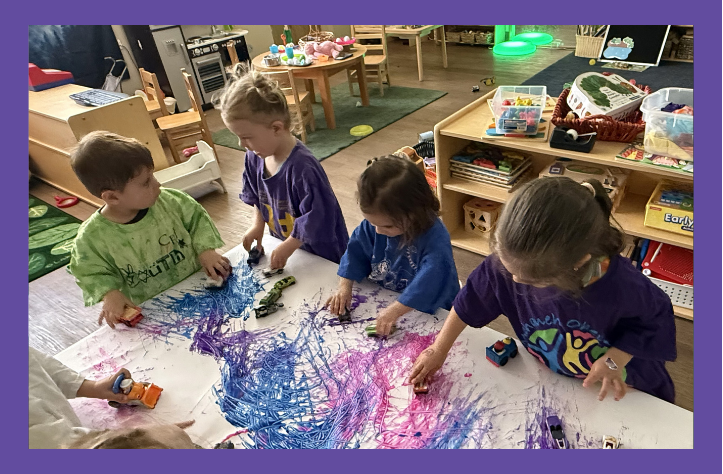
An AI-ready education preschool in Florida prepares children for a world where information is everywhere, but curiosity, creativity, and critical thinking matter more than ever.
It means helping children become confident thinkers, problem solvers, collaborators, and communicators from the very beginning.
Children absolutely still learn letters, numbers, reading, and writing. They learn them organically through meaningful experiences that matter to them. The alphabet is being learned in our classrooms through the children’s own writing and reading because they are genuinely interested in what they are doing. Counting happens naturally while building, sorting, measuring, cooking, and exploring.
That kind of learning sticks because it is connected to real life.
An AI-ready preschool is not about rushing academics earlier and earlier. It is about building the foundation underneath all future learning - and recognizing that our children are capable from the start.
Why this matters now, not ten years from now
The children entering preschool today will graduate high school around 2038 and college around 2042. The world they enter will look dramatically different from the one we know now.
Many of the jobs they will eventually have do not even exist yet.
What we do know is this. AI is becoming very good at tasks that follow predictable patterns. The human skills that will matter most are the ones machines cannot easily replicate. Curiosity. Adaptability. Emotional intelligence. Collaboration. Creative thinking.
Young children already come into the world wired for these abilities.
You see it when a two year old asks “why” fifteen times in a row. You see it when a child figures out how to balance blocks in a completely unexpected way. You see it when children negotiate with each other during play, solve problems together, or explain their thinking out loud while they build.
The work of early childhood education is to protect and strengthen those instincts while children grow into capable readers, writers, mathematicians, and learners.
What capabilities matter
There are five things we focus on most in our future-ready preschool in Orlando.
Curiosity
The desire to ask questions and keep exploring. Children stay curious when adults stay curious alongside them. A great preschool protects that instinct instead of rushing past it.
Critical thinking
The ability to observe closely, compare ideas, and rethink assumptions. Even very young children can learn how to notice patterns, make predictions, and revise their thinking based on what they discover.
Problem solving
The ability to try, adapt, and keep going. In strong early childhood environments, children learn that mistakes are part of learning. Persistence becomes natural because children are given the time and support to work through challenges.
Collaboration
Learning how to work with other people whose ideas may be different from your own. Children practice this every day while building together, solving conflicts, sharing materials, and working on group projects.
Emotional intelligence
The ability to recognize feelings, communicate clearly, and respond thoughtfully to other people. This matters enormously in life, relationships, leadership, and future work environments.
These five skills together are what we mean by AI-ready.
They are also deeply connected to the best practices in AI in early childhood education, project-based learning, and constructivist preschool models in Orlando and around the world. The urgency may feel new because of AI, but the foundation of this thinking has existed in great early childhood education for generations.
How do you teach this to a two year old?
You create an environment where it can grow naturally. At our project-based learning preschool in Orlando, classrooms are built around investigation, exploration, and meaningful experiences.
A teacher might notice a child becoming fascinated by how water moves across a table. That observation can grow into days or even weeks of exploration around water, gravity, containers, pouring, measuring, movement, and flow.
Along the way, children count cups. They compare sizes. They label containers. They ask how to spell words like “slow” or “rain.” Reading, writing, math, and science all become part of the experience because the children care about what they are discovering.
This is what project-based learning looks like in practice.
Children explore real questions. Teachers thoughtfully guide the environment. Learning becomes active, joyful, and deeply memorable. From the outside, it can sometimes look effortless. In reality, it is very intentional.
The same is true for collaboration and problem solving. Children are given opportunities to work together, encounter challenges, try new approaches, and build confidence through experience.
Letters and numbers are woven throughout the classroom environment. Children encounter them constantly through meaningful activities that connect directly to their interests and projects.
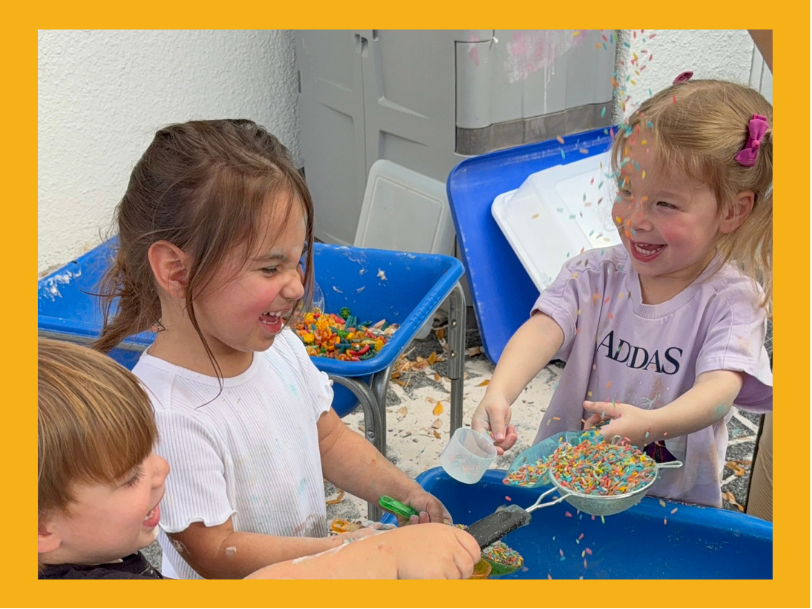
What this looks like at Shalom Orlando
Our Early Childhood Learning Center has been refining this approach for many years. This year, we have simply become clearer about how we describe it.
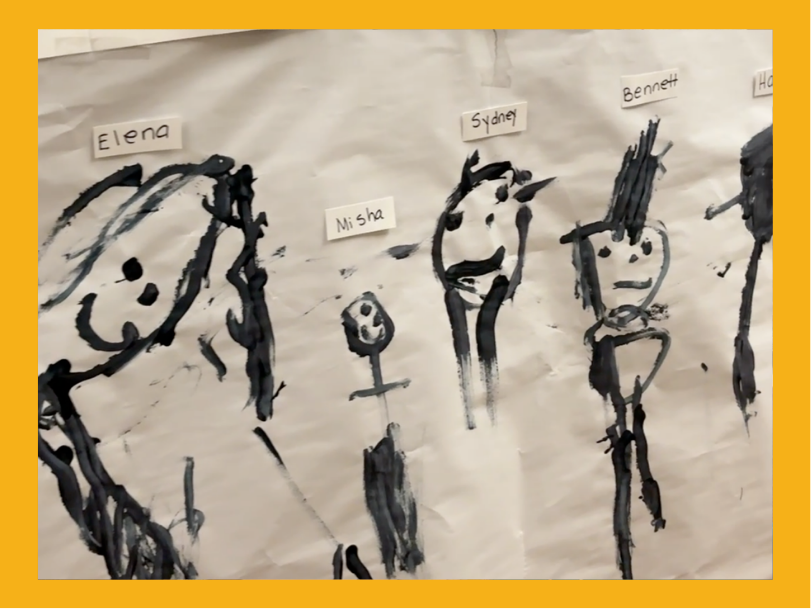
Walk into the classrooms on any morning and you will see children deeply engaged in their own investigations. You will see teachers asking thoughtful questions. You will see children collaborating, debating ideas, building theories, and documenting their thinking through drawings and writing.
Recently, one child asked whether rain on a Tuesday was the same kind of rain as rain on a Friday. That single question turned into two weeks of exploration.
The children measured rainwater in cups. They tracked weather patterns. They drew the sky each morning. They asked how to spell the word “puddle.” They read books about clouds. They built charts together.
At the end of the project, one child looked at the chart and announced, “We had three rainy days this week.” That moment held science, observation, literacy, math, collaboration, and critical thinking all at once.
That is what meaningful kindergarten readiness preschool education looks like.
If you are touring schools and wondering whether this kind of learning is real, I always encourage parents to spend time observing. Sit in a classroom. Watch how teachers interact with children. Listen carefully to the conversations children are having.
You can feel the difference very quickly.
What parents should look for when choosing a preschool
Three questions worth asking on any preschool tour, including ours.
How do teachers respond when children ask questions?
Great teachers treat questions as opportunities for exploration and discovery.
Can you show me a project children are currently working on?
In strong project-based classrooms, children are actively involved in the thinking, planning, building, observing, and reflecting.
How are letters, numbers, reading, and writing introduced?
A strong kindergarten readiness preschool in Orlando helps children develop these skills organically through meaningful experiences, conversations, projects, stories, games, and exploration. Children build deep confidence because learning feels connected to their own curiosity and interests.
How is screen time approached?
Young children learn best through movement, relationships, hands-on exploration, conversation, creativity, and play. Those experiences remain at the center of healthy early childhood education. We do not use screens to teach in out our ECLC - however, our children graduate with the skills to enter the world as critical thinkers.
A note from me
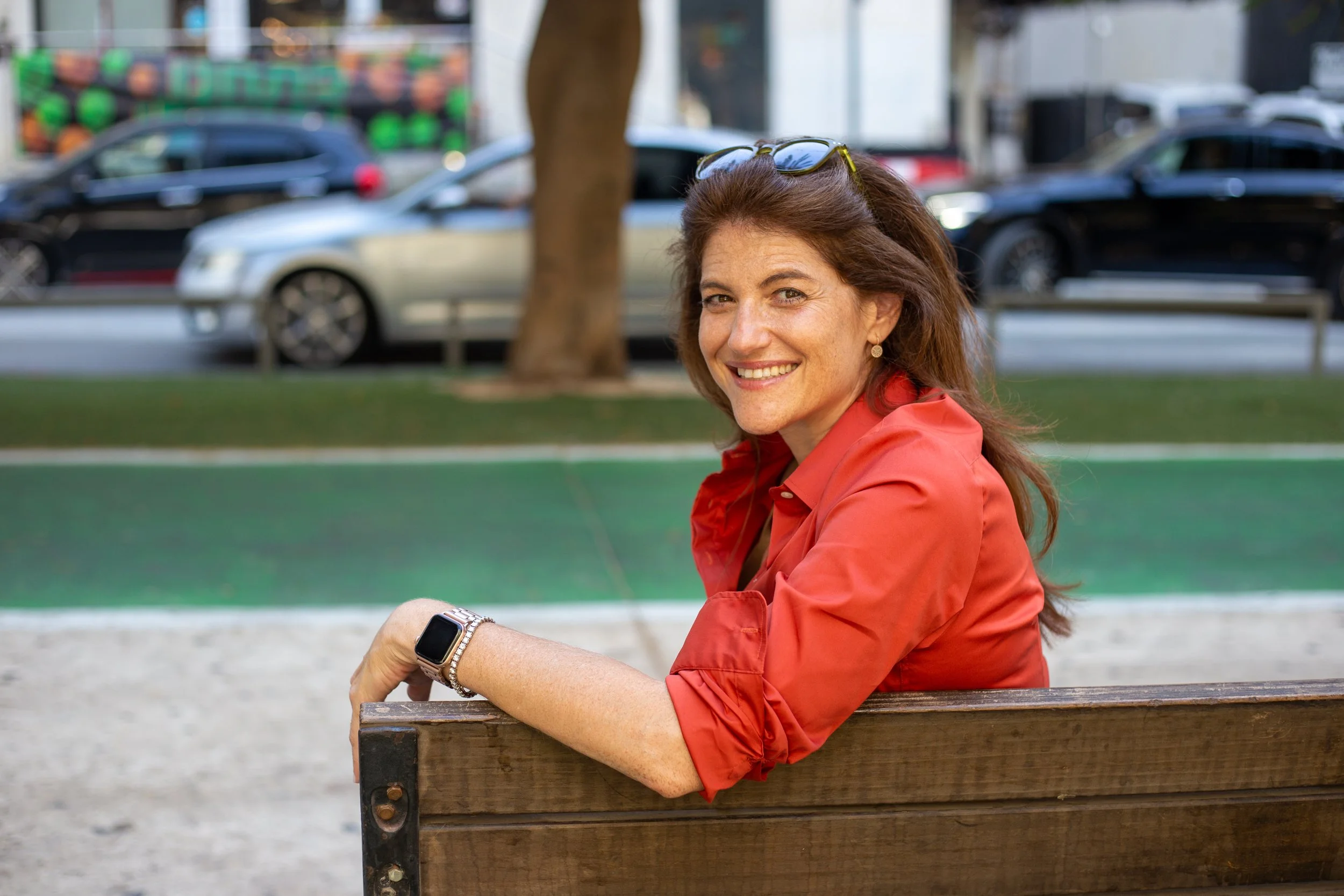
I came back to Orlando to lead this organization because I believe early childhood education is one of the most important investments a community can make.
The experiences children have in these years shape how they see themselves as learners for the rest of their lives.
Raising children for AI is ultimately not about technology. It is about raising thoughtful, curious, capable human beings who know how to ask questions, solve problems, build relationships, and engage confidently with the world around them.
If you are looking for an AI-ready preschool or a constructivist preschool in Orlando and want to see what this looks like in practice, we would love to welcome you into our classrooms.
About the author
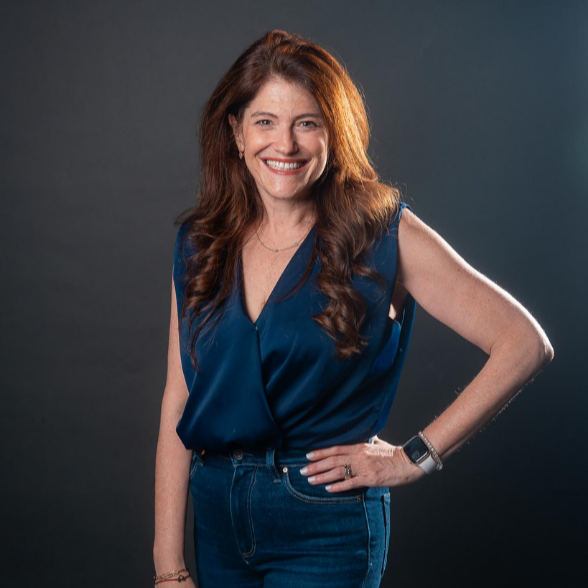
Marni Mandell is the Chief Executive Officer of Shalom Orlando. Before returning to Orlando in early 2026 to lead the organization, she spent fifteen years founding and running technology companies in Tel Aviv, including co-founding the marketing data analytics platform Konnecto. Marni has also led Jewish nonprofit organizations in the United States and Israel for over a decade, and is a co-founder of the Israeli Children's Fund (Atufim B'Ahava), supporting children who lost parents in the October 7, 2023 attacks. A native of Orlando, she attended The Roth Family JCC's Richard S. Adler Early Childhood Learning Center as a child.