What Constructivist Learning Means, and How It Builds Children Who Can Think
By James Larsen, Director, Early Childhood Learning Center, Shalom Orlando
5 minute read
When parents tour our preschool, they often ask what our teaching philosophy consists of. In the simplest of explanations: The children are deeply engaged. The teachers are listening carefully and guiding thoughtfully. The rooms feel active, calm, and purposeful all at once.
Parents can usually tell right away that it is different from a traditional preschool classroom.
The educational term for what we do is constructivism. It is not a phrase most parents hear every day; however, it explains something important about how children learn preschool concepts best.
A few months ago, after spending time with other early childhood educators through the JCCA early childhood education network, I decided we would start using the word constructivist more openly when describing our school. In the past, schools often used the phrase Reggio-inspired. The challenge is that many parents looked up Reggio and walked away with the wrong impression. They pictured children wandering freely without structure or direction.
That is not what strong early childhood education looks like.
Constructivist learning early childhood programs are highly intentional. The classrooms are carefully designed. The teachers are highly skilled. The children are learning constantly.
This article is the longer explanation I give parents who want to understand the philosophy behind what they are seeing in our classrooms.
What is constructivist learning, exactly?
Constructivist learning is the idea that children build knowledge through direct experience, exploration, conversation, and reflection. Children are not passive receivers of information. They learn by actively making sense of the world around them.
Teachers guide the process carefully. They prepare the environment, introduce materials, observe closely, and ask thoughtful questions that deepen children's thinking.
Children learn by doing.
That is how children build knowledge in lasting ways.
At the same time, foundational academic skills are happening every day. The alphabet is being learned in our classrooms organically through the children's interaction with letters and numbers, which they do because they are interested in what they are doing. Numbers, counting, patterns, sorting, vocabulary, and early literacy are all woven naturally into meaningful experiences.
Young children are capable of far more deep thinking than many adults realize.
Why this matters more than people think
Most adults were educated in a very different kind of environment. The teacher gave information. The students repeated it back. Learning often centered around memorizing, practicing, and getting the correct answer.
That system can produce strong test results. It can also produce children who become hesitant when they face a new problem without clear instructions.
The real world rarely works that way.
Life requires people who can think independently, adapt, communicate, solve problems, collaborate, and stay curious. Those skills begin developing very early in childhood.
Young children naturally want to investigate the world around them. They ask questions constantly. They test ideas. They look for patterns. They notice details adults overlook.
A strong constructivist preschool program builds around that natural curiosity instead of pushing it aside. Children develop understanding they can truly use because they helped build it themselves.
How constructivism is different from how most adults were taught
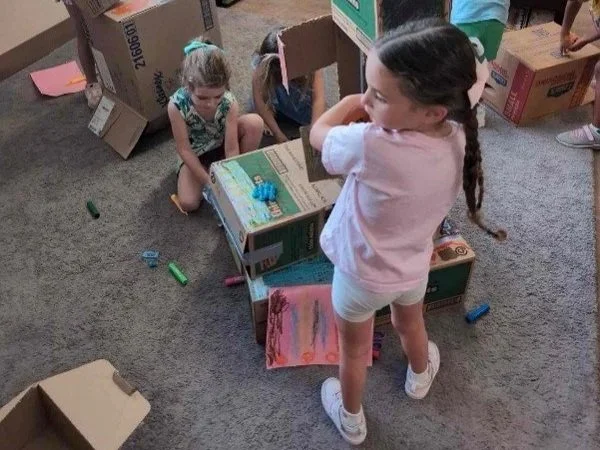
There are several important differences.
The role of the teacher
In a constructivist environment, the teacher is highly active, but in a different and deliberate way.
The teacher observes carefully, asks strong questions, prepares materials intentionally, and guides learning thoughtfully. Great teachers know when to step in and when to let children continue working through an idea themselves.
That balance takes real skill and experience.
The role of the materials
In many classrooms, materials are designed for use in one way.
In a constructivist classroom, children work with open-ended materials. Blocks. Paint. Letters. Numbers. Loose parts. Natural materials. Art supplies. Water. Clay.
These materials invite children to think creatively and solve problems in different ways. The learning happens through the process of exploration.
The role of the right answer
In traditional classrooms, the focus is often on acquiring the desired effect quickly.
In constructivist learning early childhood classrooms, the focus is on building understanding deeply enough that children can discover answers independently.
That kind of thinking lasts.
What constructivist learning looks like in our preschool
When you walk through our Early Childhood Learning Center on any given morning, you will see children deeply engaged in meaningful work.
You may see children building structures together while discussing balance and stability. You may see a teacher writing down children's observations as they investigate water, plants, shadows, or movement. You may see children returning to a project they started the day before because their curiosity is still driving them forward.
The classrooms reflect the children themselves.
The walls are filled with children's drawings, writing, questions, photographs, observations, and project work. The environment tells the story of the children's thinking.
You will also see reading, writing, letters, and numbers integrated naturally throughout the room. Children use letters and words because they want to label, communicate, create signs, tell stories, and record ideas. Counting and early math happen because children are sorting, measuring, comparing, building, and solving problems together.
This is inquiry-based learning in practice.
The teachers are constantly planning behind the scenes. They make sure children are developing language, literacy, early math, social skills, motor development, and emotional confidence across the week.
The structure is real. It is simply built around how children actually learn developmental and academic concepts most effectively.
The five things constructivist preschools build
In my experience, constructivist programs consistently help children develop five critical strengths.
Deep understanding
Children remember what they discover through experience. A child who spends two weeks investigating water, shadows, plants, or movement develops real understanding that stays with them.
Confidence to try
Children who regularly solve problems independently develop confidence in themselves as learners.
Persistence
Constructivist classrooms teach children that working through difficulty is a normal part of learning. That mindset becomes incredibly important later in school and life.
Real collaboration
Children learn to listen, negotiate, explain ideas, compromise, and work together toward shared goals.
Flexible thinking
Children who build understanding through exploration can apply their knowledge in new situations. That flexibility matters enormously over time.
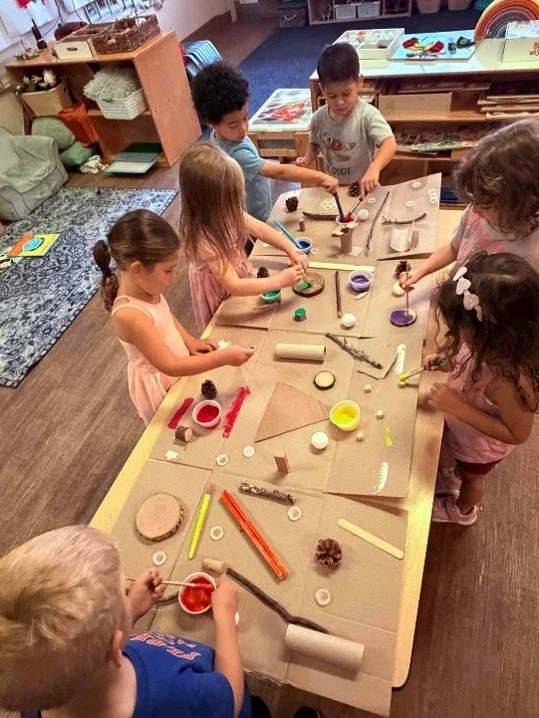
ECLC students painting for their art class.
How parents can recognize constructivist teaching in practice
If you are touring preschools, including inquiry-based programs, here are three simple things to look for.
Listen to the questions teachers ask
Strong constructivist teachers ask thoughtful, open-ended questions. They encourage children to explain ideas, make predictions, and think more deeply.
The conversation matters.
Watch what children do independently
In strong classrooms, children stay engaged even when adults are not directing every moment. They are invested in what they are building, investigating, creating, or solving.
Look carefully at the walls
In a true constructivist preschool classroom, the walls reflect children's actual thinking and work. You will see documentation of projects, observations, drawings, writing, photographs, charts, and questions generated by the children themselves.
The classroom feels alive with learning because it is.
A note from me
After more than thirty years in education, I came to lead this preschool because I believe this approach respects how young children truly learn.
The word constructivist may sound academic. The experience itself is deeply human.
Watching young children investigate ideas, ask thoughtful questions, solve problems together, and grow into confident learners is one of the most meaningful parts of education.
That is the work happening here every day.
If you are looking for a constructivist preschool you can trust, I encourage you to visit us in person. Sit in a classroom. Watch the children. Listen to the conversations happening around you.
You will understand the difference very quickly.

About the Author
James Larsen is the Director of the Early Childhood Learning Center at Shalom Orlando. Before joining the ECLC, he spent more than thirty years in Orange County public education, finishing his career there as a deputy superintendent. His two children attended the ECLC, and he returned to the preschool he knew as a parent in order to lead it. He holds a PhD in education with a minor in psychology, and has spent his career thinking about how young children actually learn.